
KNUST E-Learning Centre Outlines Strategy for Digital Education
The KNUST E-Learning Centre has announced a new strategy to reshape its role in digital education.
Professor Emaanuel Kofi Akowuah, the Director of the Centre, presented his vision this week.
The strategy is to position the Centre as a leader in educational technology, prioritizing innovation and financial independence over traditional media services.
Director’s vision for eminence
Professor Akowuah explained that the Centre’s new direction supports the university’s institutional goal of moving "from Excellence to Eminence."
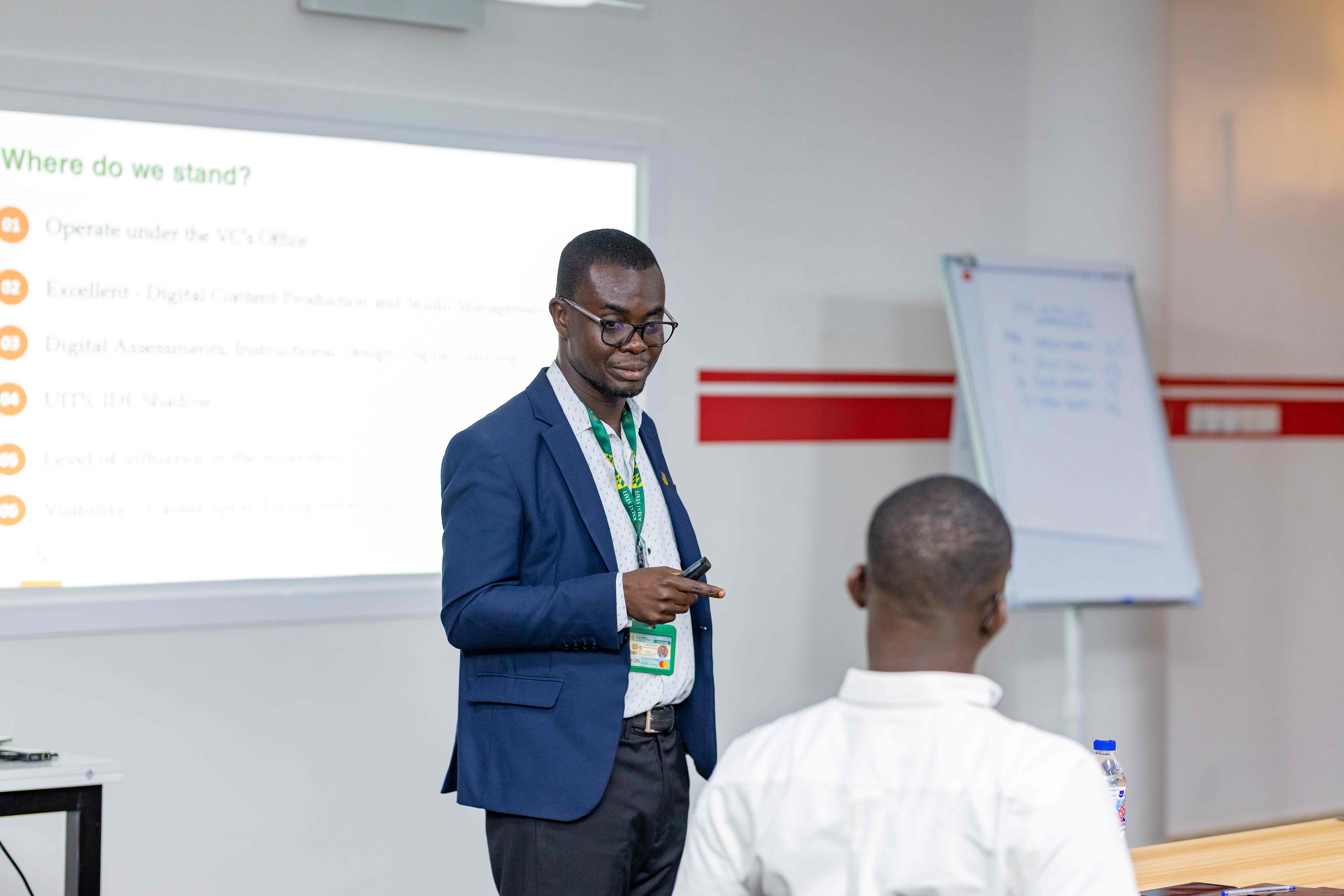
He noted that the Centre must be recognized for transforming learning, not just for content production or video streaming. He set a clear mandate for the team.
“We want to establish KNUST E-Learning Center as a globally recognized leader in innovative, sustainable, and high impact digital education,” he said.
The strategy is built on three core guiding principles for all future projects: Innovation, Income Generation, and Impact. The Director emphasized the need for higher performance standards. “Good enough will not be acceptable.
We are going to hold ourselves to a higher standard.” he stated. He also highlighted the need for financial self-reliance, encouraging staff to develop monetizable projects to reduce dependence on the university's central budget.
E-Learning Africa Conference
The Centre is focusing on increasing its influence within the African digital learning sector.
Professor Akowuah noted that the Centre must resolve the perception that its work is limited to technical support like live streaming.
The strategic goal is for the Centre to become the primary authority on electronic learning policy and practice within the university ecosystem. Professor Akowuah confirmed that the Centre’s work must set a standard for digital education across the region.
“We are shaping the future of Global education right here at KNUST,” he said, asserting the Centre’s ability to lead technological change.
Calendar of activities (2026 focus)
The Centre is transitioning into an execution phase, focusing on key technological developments that demonstrate high impact.
These activities are designed to secure visibility and relevance for the Centre. The work plan for the next phase, which will continue into 2026, prioritizes innovation in the following areas:
Digital Assessment: Developing technology, potentially leveraging Artificial Intelligence to handle and grade handwritten examinations efficiently.
Immersive Learning: Implementing Virtual Reality (VR) and Augmented Reality (AR) solutions for training purposes, especially in fields requiring practical experience or access to hazardous environments.
Student Engagement: Creating new technical solutions to increase student participation rates with digital learning materials, addressing the current low usage of traditional Learning Management Systems (LMS). The Director confirmed that all future projects must align with this new strategic vision to qualify for resources.
Published: 18th November, 2025 Source: KNUST E-Learning Centre